
Active
IPF: Innocuous Painful Feedback for Prosthetic Grasping
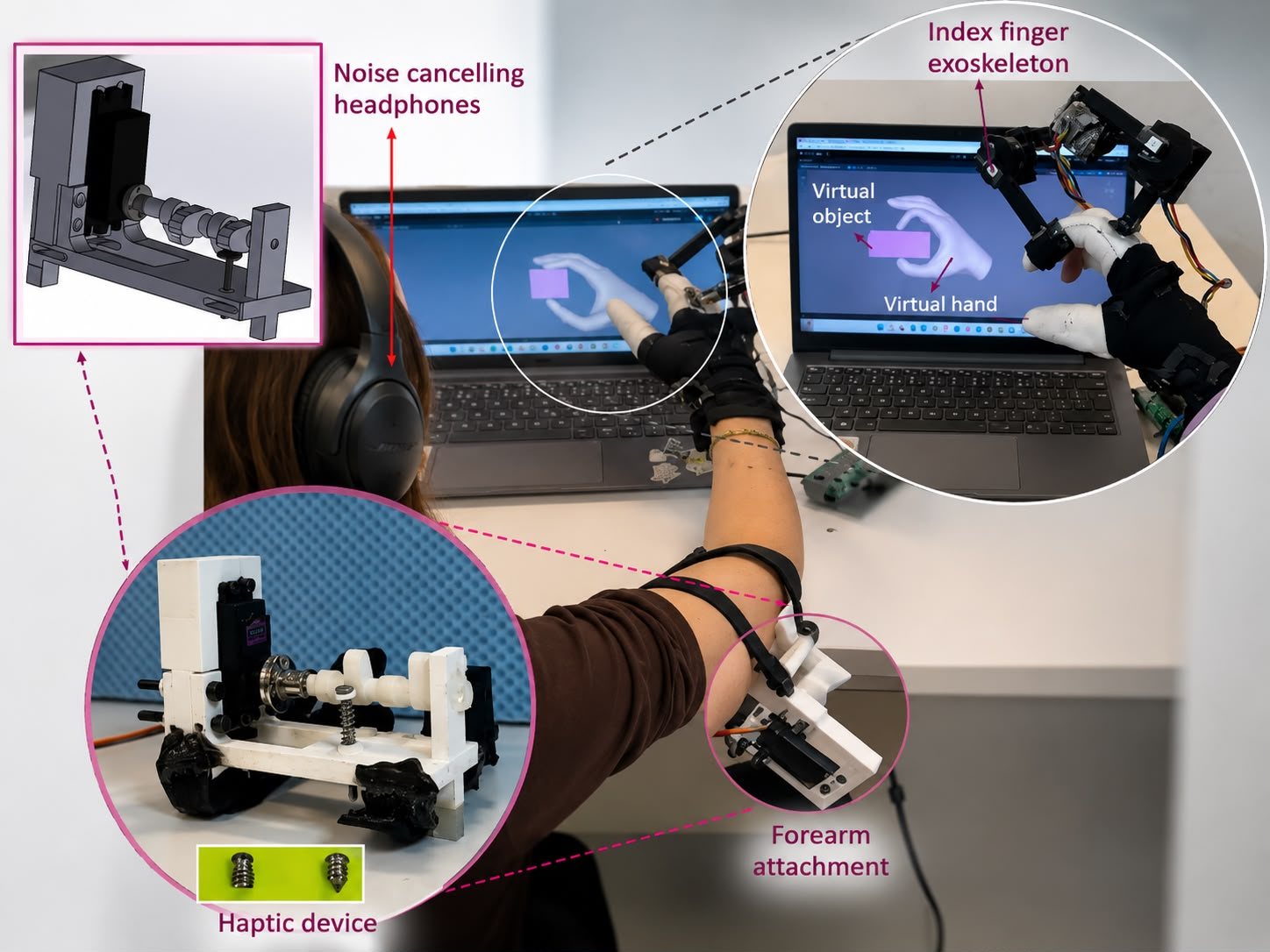
A wearable tactor that returns tactile and innocuous painful feedback to the residual limb, so prosthesis users can detect and correct grasp errors without watching.
We welcome doctoral, MSc and undergraduate researchersOpen positions


Darin Elessavy is a biomedical engineer and MSc student in Electrical and Electronics Engineering and Cyber Systems, with a research focus on prosthetic robotics, human–machine interfaces and haptic feedback technologies. Her work covers the design and development of wearable robotic systems and the integration of sensory feedback to improve interaction between users and prosthetic devices.
Her current research sits within the HANDSENSE project and develops a wearable tactor-based sensory substitution system for upper-limb prosthesis users. It addresses the strong reliance on visual feedback during grasping, which increases cognitive demand and makes it hard for users to detect and correct grasp-related errors. The system provides intuitive tactile and innocuous painful feedback through controlled stimulation of the residual limb, so that users can perceive task-related errors without continuously watching what they are doing.
Living Robotics Laboratory, 2024–present. Research on haptic and painful sensory feedback for prosthetic control; design and development of wearable tactile stimulation systems and experimental platforms; experimental characterization of stimulation parameters and analysis of behavioural responses during grasping.
Poster presentation at the Turkish Robotics Conference, Koç University.
A wearable tactor that returns tactile and innocuous painful feedback to the residual limb, so prosthesis users can detect and correct grasp errors without watching.
D. Elessavy & E. Hocaoglu
IEEE International Conference on Cyborg and Bionic Systems (CBS)